Thursday, May 16, 2013

My Next Book: A Man and His Mountain

I just got the cover and catalog copy for my upcoming book (and first biography), A Man and His Mountain: The Everyman Who Created Kendall-Jackson and Became America's Greatest Wine Entrepreneurand had to share. I think it might be the most gorgeous cover yet of any of my books.

Publication is October 22, but cover creation is the stage when a book finally feels real (and basically done - phew!). I loved working on this book, and getting to spend time on Alexander Mountain with Jess Jackson. He was a remarkable guy with a remarkable story. He's the only ex-lumberjack turned Berkeley cop turned lawyer turned winemaker to land on the Forbes 400 list -- and he put chardonnay on America's tables and won the Preakness Stakes Triple Crown race while he was at it.

Monday, March 25, 2013

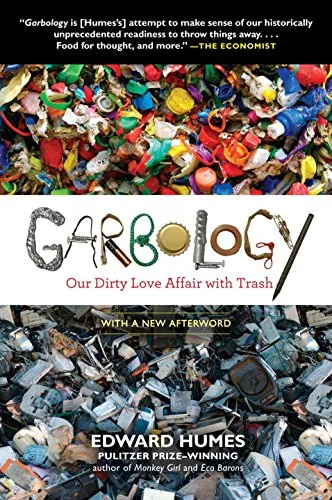
Communities Read Garbology

I love the One Book, One City phenomenon, which brings a town (or campus or other sort of group) together to read, enjoy and discuss a single book. It's a fantastic way to foster both literacy and a sense of community through the power of storytelling.

My first experience with the One Book world was through contributing my essay, "The Last Little Beach Town," to the My California project, for which 27 writers (among them Michael Chabon, Thomas Steinbeck, Carolyn See and Aimee Liu) wrote essays describing our most treasured California places and experiences. All proceeds from the book support literacy programs for students, and the combination of a good read and good works pushed My California onto the bestseller list. Such cities as Santa Barbara, Long Beach, Sacramento and Whittier selected My California as their One Book read, and our roving troupe of writers attended events and community discussions around the state, where readers shared with us their own stories and insights. It was an amazing experience.

Which is why I'm so pleased that Garbology has been selected as a One Book choice for every incoming freshman this fall at California State University Northridge. Students participating in the Marymount College One Campus, One Book program also will be reading Garbology, along with the residents of Palos Verdes, California, in their One Book, One Peninsula program. And just this past week I learned that my alma mater, Hampshire College in Amherst, Massachusetts, has chosen Garbology as its campus common reading at the start of the new school year.

I am looking forward to joining these One Book gatherings. It's always gratifying when people show interest in my books, of course, but more importantly, these are opportunities to start community-wide conversations about our nation's over-consumption, disposable economy, and incredibly wasteful ways. We Americans produce more trash per capita than any other people on the planet. Trash is the biggest thing we make and our number one export, with each American on track to produce a staggering 102 tons of garbage in a lifetime.

P.S. The updated paperback version of Garbology is out this spring, just in time for Earth Day.

Thursday, February 21, 2013

Wind Power Comes of Age

Wind power is not only the fastest growing source of electricity in the U.S. Wind's best kept secret is that it's also the cheapest source of electricity. From my latest stories in Sierra Magazine:
Wind power, which has plenty of construction and maintenance costs but no fuel costs at all, now ranks among the cheapest energy sources, according to separate analyses by the U.S. Energy Information Agency and the global investment bank Lazard, whose annual Levelized Cost of Energy Comparison is an industry staple. And that's not because of federal subsidies and credits. The latest figures show that when the effects of subsidies that all energy industries receive are stripped away, wind power beats everything else, natural gas included. This dramatic calculation has been largely left out of the nation's energy debate, allowing the image of wind as expensive and impractical to persist.
Many states are investing heavily in wind, such as Iowa, where farmers like Randy Caviness have turned it into a second crop. Twenty percent of Iowa's generating capacity is now wind-based.

According to the National Renewable Energy Laboratory, there is enough prime windy land—away from cities, suburbs, and environmentally sensitive areas—to produce all 4.1 million gigawatt-hours of power that the United States generated in 2011 nine times over. That's a lot of low-cost power left on the table. Makes you wonder who's behind the recent anti-wind campaign to convince Americans that wind is too expensive and inefficient...

Saturday, January 19, 2013

Garbology Goes to College

Terrific news: Cal State University Northridge has selected Garbology as this fall's common read for incoming freshmen -- with the book nominated and chosen by faculty, staff and students. I'm looking forward to speaking with the 4,000 freshmen at the university convocation in September.

This is what Learning Resource Center staffer Debbi Mercado wrote in nominating Garbology:
"I think the book could result in a number of interesting campus projects and leave us all with a sense of empowerment and a desire to make some changes in our daily lives. . . . it provides great fodder for classroom discussions and even personal reflections about consumerism, waste, environmental issues, values, the daunting math of it all, and how we might each change our trash habits."


Tuesday, December 4, 2012

The Champion of Plastic Bags

Stephen L. Joseph is pacing the halls and stairways of the San Luis Obispo County Courthouse, having just wrangled a brief break and an extra fifteen minutes for his closing statement from an increasingly impatient judge. Now as he wanders distractedly, he rehearses his best lines against a type of environmental ordinance that cities and counties across California and the nation are adopting.

"The thing is, I feel I am the true environmentalist here, because I'm only interested in the truth - solid science, solid facts," says the Tiburon-based attorney, whose native British accent is still detectable after more than three decades of U.S. citizenship.

No, Joseph is not battling over massive solar farms in delicate desert habitats. Nor is his case about erecting wind turbines in the flight paths of migratory birds. Rather, Joseph's mission is to save the plastic shopping bag from extinction....

Read more about the campaign to ban plastic bags - and the man whose job is to bag the bans - in my latest California Lawyer magazine article, as well as in Garbology: Our Dirty Love Affair with Trash.

Sunday, October 21, 2012

McGovern: On honor, service & the GI Bill

George McGovern, the gracious, intelligent leader and aged war hero, former presidential candidate and retired senator, has died.

I interviewed McGovern while working on my book Over Here: How the GI Bill Transformed the American Dream. He told me his career in the Senate and 1972 run for the presidency were made possible in large part by his military service and the G.I. Bill, which (as it had done for so many other members of the "Greatest Generation") enabled him to rise from humble origins to become a national leader. He once said:

 “If, in fact, we were anything close to the greatest generation, its probably the result of three factors. We were honed and toughened by the Great Depression for ten years prior to World War II. Nobody had a dollar. There weren't any rich people; we were all poor in the 1930s. And then the war itself — we believed in it. We had a clear mission, and we executed it. So that gave us a sense of self- confidence. The third thing… is the G.I. Bill of Rights. That's one of the most marvelous things the federal government has ever done, is to offer these sixteen million people who fought in World War II a chance to go to any college of their choice. I went all the way through Northwestern University to a Ph.D. in American history. It changed my life.”

Here's a brief excerpt about McGovern from Over Here, which will be re-published in eBook format later this year:

McGovern, the South Dakota preacher’s son, went from university professor after the war to Congress and then the Senate for eighteen years. He ran for president as the Democratic nominee in 1972, the campaign that defined his career. Incumbent President Richard Nixon, mired in Vietnam and soon to be driven from office by the Watergate scandal, defeated McGovern in a landslide by successfully painting him as a dangerously radical “peacenik” for opposing the war in Vietnam. That cartoon portrait has stuck for decades, as McGovern’s name, to this day, is used as a warning to Democratic politicians who consider embracing liberal or dovish ideas: Don’t pull a McGovern.

The problem with this view, of course, is that McGovern was right. A decade before most anyone else in the national leadership, he understood the truth of Vietnam and, more importantly, was willing to speak it: that the war was an unmitigated disaster, a poisonous cauldron of bad policy, bad tactics, bad intelligence, a misuse of brave servicemen, the needless destruction of more than two million Vietnamese and sixty thousand American lives, and an alliance with a corrupt and unpopular regime that was doomed to fail. As McGovern predicted, it finally ended badly, with a shameful retreat that Nixon insisted on calling, “Peace With Honor,” though it soon left a communist regime in total control of the country and our former allies in chains or in exile. That the war was a mistake is now overwhelmingly accepted as obvious and true by the vast majority of Americans, which obscures just how hard it was for McGovern to stand up and say so at the time.

Sunday, September 23, 2012

Makers & Takers vs The GI Bill

When Ronald Reagan convinced the nation that the nine most dangerous words in the English language are: I'm from the government and I'm here to help, the Gipper knew better, even if his audience didn’t. Reagan was a member of the WW II generation and half his colleagues in Hollywood, from Newman to McQueen to Matthau, got their educations, training and first homes through the biggest of big government programs, the G.I. Bill.

Yet Reagan’s 1980s laugh line has become 21st century conventional wisdom, justification for slashing and spurning every government program in sight and, more recently, for constructing false and divisive labels about America being a land of good "makers" and bad "takers." This is a good time to recall that the generation that fought World War II,  memorably described by Tom Brokaw as "the Greatest Generation," didn't just serve their country. They also happily took more government aide, support and incentives than any other generation in the history of the world. And the United States is better, stronger and more prosperous because of it.

WW II vets register at Indiana University.
Consider what happened immediately after World War II ended: Millions of veterans lined up for hours, sometimes days, to register for free college educations, to buy homes with no money down and mortgages cheaper than rent, to sign up for vocational training and job counseling, and to apply for business and farm loans -- all courtesy of Uncle Sam and the original, epically generous G.I. Bill. The U.S. needed jobs, an educated work force, new industries, new products, new businesses and new housing, and the G.I. Bill, at great cost that has proved to be the most productive investment in history, jumpstarted it all, turning America into the world's first true super power.

Just imagine how a politician today would be pilloried if he proposed offering an entire generation free college, subsidized mortgages, job training and medical care. Why that would be a costly boondoggle, outright social engineering – it would violate Reagan’s dictum that government isn’t the solution, it’s the problem. Today’s unthinkable, however, was yesterday’s matter of course.